Showing posts with label Labour leadership. Show all posts
Showing posts with label Labour leadership. Show all posts
Tuesday, 28 September 2010
Different Labour, no longer New Labour
A large amount of Ed Miliband's speech today could have been given by David Cameron, and even more of the speech could have been given by Nick Clegg. The new Labour leader wanted to show that he is very different to the past few leaders of his party.
The Iraq War, the removal of civil liberties, mass emigration, even how to combat the deficit, Ed Miliband said that the Labour government had been wrong. He was trying to show that under his leadership, Labour will be a very different party to the one that lost the election last May (even though it was Ed Miliband who wrote the 2010 Labour manifesto).
Although there was a lot of criticism of the Prime Minister, which was expected, there was nothing about the Deputy PM. Perhaps Ed Miliband is thinking of a future coalition government of his own - or maybe he'd like to gain the support of those Liberal Democratic voters who feel disillusioned with their party's union with the Conservatives. At the general election, the Conservatives received 36% of the vote, Labour had 29% and the Liberal Democrats 23%. The most recent poll showed the Conservatives at 39%, Labour in the lead at 40% and the Liberal Democrats down to just 12%. In order to become Prime Minister, Ed Miliband will have to keep those Liberal Democratic voters who have switched to Labour.
The speech itself was good, but Ed Miliband is not yet as good an orator as Tony Blair, President Obama or David Cameron. However, such skills often come with time. The wounds in the Miliband family, caused by the leadership election, will probably heal with time as well.
All the indications are that David Miliband will not seek election to the Shadow Cabinet, and thus leave frontline politics. So there will be no Miliband equivalent of the Blair-Brown rivalry on the Labour frontbench, and from now on when I say 'Mr. Miliband' I shall be refereeing to Ed.


Saturday, 25 September 2010
The Miliband age has begun
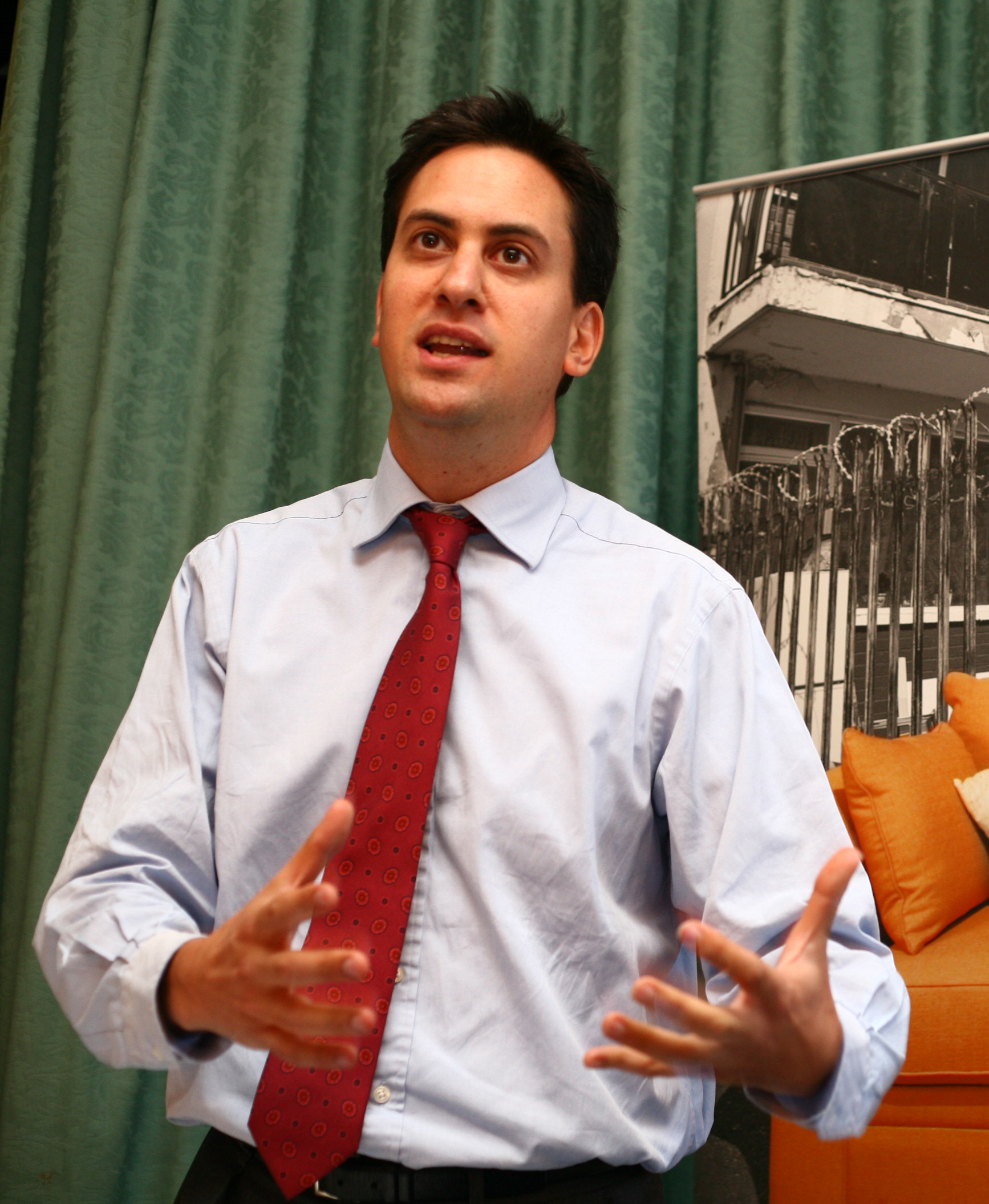
So, Ed Miliband, MP for Doncaster North, is the new Leader of the Labour party, beating his own brother by just 1.3% in the last round of voting. It will take some time to get used to Mr. Miliband and see how his leadership will affect the party.
One thing I noticed was David Miliband, who looked devastated. He led the vote in every round except the last when he was overtaken by his younger sibling. Speculation about a Ed-David split in the party has already begun, but Ed Miliband can take some comfort from a look at recent history. At the height of Gordon Brown's unpopularity, David Miliband was given the opportunity to challenge Mr. Brown for the leadership on three occasions, and he was never able to go through with it. On that record, it seems unlikely he'll find the courage to unseat his own brother.
So Ed Miliband is the Leader of the Labour party and the Leader of Her Majesty's Loyal Opposition, but is he also the next Prime Minister and First Lord of the Treasury?
Wednesday, 22 September 2010
Which Mr. Miliband?

After a four month campaign, the Labour leadership election is over. As of 5pm today, the polls have closed. Of course, we won't know the actual result until 5pm on Saturday, but at least the candidates can now rest without worrying about missing a hustings or a canvassing opportunity.
So, who will win? Well, if Diane Abbott, Ed Balls or Andy Burnham wins it will be seen as a major upset. If Diane Abbott gets it there is a strong possibility of a civil war inside the Labour party between the left wing (which includes Ms. Abbott) and the right wing (which is the majority of Labour MPs). Ed Balls will be able to keep the party together (his somewhat stern reputation will see to that) but he has a similar problem to Brown in that the public don't warm to him.
Andy Burnham is an unknown. He will appeal in northern voters, but he looks young and innocent (although so did Tony Blair when he became Labour leader in 1994). David Cameron should fear Mr. Burnham as Labour leader. In politics, figures who come from nowhere tend to win elections (Barack Obama, Tony Blair, David Cameron are good examples of this).
Speculation about the hypothetical leaderships of Abbott, Balls and Burnham are interesting, but it would be extraordinary for the winner not to be called 'Mr. Miliband'. Which 'Mr. Miliband', of course, is a matter of debate.
This leadership election has been given a unique dynamic due to the fact that the two frontrunners are sibling. This dynamic is unlikely to end when the result is announced on Saturday, it will have a great influence on the leadership of the eventual winner. The loser will almost certainly stand for the Shadow Cabinet, which will be led by their brother. The Blair-Brown rivalry influenced the Labour party and the country for over a decade. I wonder what influence will a Miliband-Miliband rivalry have?
Saturday, 18 September 2010
Fun at the conference!

Conference season is here again, and there's always something of interest at this point in the political calendar, though normally it's one of the party leaders in some form of difficulty. However this year is interesting for very different reasons.
Next week is the Liberal Democrat conference which in previous years has been described as narcolepsy inducing, but this time the keynote speakers will be members of the government. Nick Clegg will give his traditional leader's speech as Deputy Prime Minister and Conservative MPs will be welcomed! Who would have predicted that a year ago?
Then, on Saturday 25th, the Labour party will begin by finally announcing the result of their leadership election. This is probably the most important moment of this year's conference season. The next leader of the Labour party will have an enormous influence on British politics in the next few years. The really exciting thing is, no one knows who the next leader will be!!
After the Labour conference, it's the Conservatives' turn with David Cameron's first conference speech as Prime Minister.
Tuesday, 31 August 2010
When family and politics mix
One of the most interesting features of the current Labour leadership election is the fact that two of the candidates (the front runners no less) are brothers. At the start of the leadership election, David and Ed Miliband assured the media (and their mother) that 'brotherly love' was stronger than politics. However, in the last few days things have become somewhat more acrimonious.
In an interview with Eddie Mair on PM two weeks ago, Ed Miliband was asked if he had the courage to sack his brother. He refused to answer the question, saying he didn't want to answer hypothetical questions. When David was asked the same question two days later, he simply said 'yes'. Both the brothers have written newspaper articles and given speeches which have been interpreted as attacking their respective sibling.
Perhaps this behaviour is natural between the front runners in a close race. Normally however, after an election, the candidates are able to move on from the electoral battle. Even in the most hostile contests, at worst a friendship might come to an end, but this election might split a family.
Of course, there have been other political families. The Churchills in the UK, the Kennedys and the Bushs in the US, the Nehrus and Gandhis in India and the Bhuttos in Pakistan. The difference with the Milibands is they're not working together, they're fighting against each other - John, Robert and Edward Kennedy all ran for President of the United States, but not in the same year.
In the next few days Labour and Union members will be receiving ballot papers for the leadership election. The polls suggest that Mr. Miliband will be the winner, though which Mr. Miliband is still in doubt. Perhaps, after the election is over, the wounds will heal and the brothers, no matter which one (if any) is leader, will be able to move on. That's certainly what their mother will be hoping!
Wednesday, 11 August 2010
The Queen of second preference?

Almost exactly five years ago the Westminster village was gripped by the Conservative Leadership election. There was a real sense that the winner of that contest would go on to become Prime Minister, a sense that was proved to be correct. The 2005 Conservative leadership election, won by David Cameron, had an excitement to it that is very much lacking in the current Labour leadership election.
Oddly, as I have said previously, the next leader of the Labour party has a much better chance of becoming PM than David Cameron did in 2005. Despite this, even I, a self confessed political nerd, couldn't bring myself to watch the last televised hustings. I knew what all the candidates would say – it's what they've said in every other such meeting. So why does Labour's contest lack energy?
In the Conservative party, leadership elections go through several rounds before the final vote. The MPs each vote in runoff ballots over a period of several days until only two candidates remain, then the ordinary members of the party choose from those two. It was this successive election process that was exciting in 2005 as it showed the gradual and unexpected rise of David Cameron. Similarly, the primaries and caucuses of the 2008 US presidential election, in which Barack Obama rose to prominence, made that vote all the more exiting.
In Labour's leadership elections however, after the initial nominations, there is only one vote. Also, AV elections are notoriously difficult for pollsters to measure, so there is little interest in the opinion polls. This means it is hard to know what is happening in the country and which candidates are doing well or badly.
All the excitement will come on Saturday 25th September when the result is announced. As described in a previous blog, the tactics of the second preference vote is crucial. The Miliband brothers will most likely top the first round, but after that things may get more interesting. A look at what happened in the 2007 deputy leadership election indicates what AV can produce. Supporters of Ed Balls, Andy Burnham and Diane Abbott are not likely to vote for a Miliband for fear it will knock out their candidate in the second round. So to whom will they give their second preference? It will probably be someone who is liked but perceived not to be a threat. Could Diane Abbott be that person?
Monday, 19 July 2010
The next Leader of the Opposition
The BBC's chief political correspondent, Laura Kuenssberg, has interviewed each of the candidates for the Labour leadership.
In a little over two months, one of the interviewees will be the Leader of Her Majesty's Most Loyal Opposition, putting themselves forward as an alternative Prime Minister for the British people. So it's well worth a look for anyone with a vote in the forthcoming election.
Diane Abbott
Ed Balls
Andy Burnham
David Miliband
Ed Miliband
Wednesday, 7 July 2010
Can 'divide and conquer' work for Labour?

Labour's main strategy since the formation of the coalition has been to split the Conservatives and Liberal Democrats apart. It is an obvious approach, but one which may rebound if not done wisely. This has implications for the Labour party leadership election as each candidate wants to show that they are the wisest one of all.
David Miliband attempted on Twitter to convince Liberal Democratic MPs to vote against the coalition's budget, calling Nick Clegg a "dumb waiter" of the government. The budget passed with ease.
The problem is that Labour's attempts to prize the governing parties apart might end up bring them closer together – uniting them against their common political enemy.
Mike Smithson of politicalbetting.com has predicted that the coalition will fall on 6 May 2011, though not as a result of Labour. The date of the prediction is the day after the proposed AV referendum. Whatever the result, one of the coalition parties will be very unhappy on that day (the Conservatives if AV wins, the Liberal Democrats if it doesn't).
The next Labour Leader, whoever they are, will have to act very carefully next May if they want to continue the 'divide and conquer' strategy with the coalition.
If the next Labour Leader acts wisely, we might see the collapse of the coalition, an election and maybe even a Labour Prime Minister by this time next year. Acting unwisely may lead to a successful coalition lasting for a full five-years and Labour out of office for a generation.
Sunday, 20 June 2010
Is Labour learching to the right?
After the formation of the coalition government, there was talk about what would happen to the Labour party which found itself in opposition for the first time in 13 years and facing mixed centre-right/centre-left government. The most likely scenario seemed to be, with the Conservatives and Liberal Democratic taking up the middle ground, Labour would be pushed into talking about issues which are to the extreme left of most voters. In this new again of politics, even the most logical conclusions can be proved wrong very quickly.
In a BBC interview today, Ed Balls again said that one of the biggest issues in the UK at the moment is immigration, a topic normally talked about by those to the right of the political spectrum. Having said that, the people inclined to vote Conservative have benefited the most from recent immigration which has helped fill the worker shortage, and Labour voters are most disgruntled with the migration of skilled workers from Eastern Europe, who are erroneously believed to be taking jobs and housing. In fact the increase in support for the BNP at last year's local elections came mainly from disaffectioned Labour voters, not Conservatives.
Perhaps Mr. Balls believes the old conclusion that immigration is a right wing issue may not be true any longer. If the Labour party elects Ed Balls as their new leader, they will have chosen a path that will change the structure of politics as much as the coalition.
Wednesday, 16 June 2010
The BBC's Labour hustings
Standing out as a leader was the mission for the candidates at last night's Newsnight hustings, yet none of the five contenders completed their mission.
At PMQs today, David Cameron said the candidates looked 'like a Star Trek convention', though I don't think the Prime Minister's view is necessarily impartial.
It's hard to judge how each candidate did, there was no clear winner. With the exception of Diane Abbott, the candidates seemed nervous and unwilling to stand out for fear of saying the wrong thing. Even for political nerds, it wasn't all that interesting, yet the winner of the Labour Leadership could end up being our next Prime Minister.
Wednesday, 9 June 2010
Prime Minister Diane Abbott in 2015
So, she's done it! Diane Abbott, along with Ed Balls, Andy Burnham and bothers David and Ed Miliband, received the MPs needed to get onto the ballot paper for the Labour leadership.
There is now a very small chance that Diane Abbott will be the next Prime Minister of the United Kingdom. When I say 'very small' I mean miniscule, but still a possibility nonetheless.
David Miliband is the favourite to get the leadership by some way. He was Foreign Secretary for three years, he's been an MP since 2001 and studied at Oxford and MIT. He also has the most nominations from Labour MPs, is seen as a Blairite and his brother Ed, is also going to appear on the ballot paper. Being the favourite though, doesn't mean he's going to win.
As I said in a previous post, the AV system of voting in the Labour party makes the outcome hard to predict. Diane Abbott is popular with the left of the party, which makes up a large section of the trade unions and party members who have 67% of the vote.
The next leader of the Labour party will face a fragile coalition government which has to make dramatic and unpopular cuts to the public services. It is entirely possible that the next Labour leader, if they do their job properly, could lead their party to victory at the next election and walk into Downing Street as Prime Minister. Which of the five candidates is best suited to do this job it is the unenviable decision for the Labour party.
So will Ms. Abbott one day be PM? At this point it seems very unlikely, but then people said the same about Margaret Thatcher in 1975 and Barack Obama in 2007.
Friday, 4 June 2010
Who will still be fighting in a weeks time?
Next Wednesday the nominations close for the Labour leadership. After a slow start, there has been a flurry of nominations this week. The biggest riser has been Diane Abbott who has moved from one nomination to seven in a matter of just a few days. This may not seem like much, but a big task for a candidate in any election is convincing the electorate they can win. This is especially true with Labour MPs, whose votes are public and they don't want to upset the new leadership by having supported another candidate.
Looking at the numbers, it seems like Ms. Abbott has little chance of winning. David Miliband has almost double the 33 MPs needed for nomination, his brother isn't far behind and Ed Balls has exactly the correct number of MPs to get him a place on the ballot. Andy Burnham still needs a few more nominations, but he insists he will make it. Then there is John McDonnell and Diane Abbott whose nominations are in signal figures. And yet, there still is a sense that Ms. Abbott could make it. The undeclared MPs are disproportionally form ethnic minorities, from whom Ms. Abbott says she has the most support and she is popular in the wider party too.
The system of nomination in the Labour party was specifically designed to keep left-wing candidates (like Ms. Abbott) off the ballot paper. In the actually election, two-thirds of the vote comes from the ordinary party members and the affiliated originations, who are significantly to the left of most Labour MPs, not to mention the general public. This means that when left wing candidates do manage to get onto the ballot, they tend to do rather well.
For example, left wing MP Jon Cruddas received the highest number of first preference votes in the 2007 Deputy Leadership election. If the Labour party had the same system for electing its leaders as the Conservatives, Mr. Cruddas would now be Deputy Leader. The reason why he is not is due to AV.
The Alternative Vote (AV) is a form of preferential voting. Instead of voting for just one candidate, the voter puts a '1' beside their first choice, and a '2' beside their second choice. If no one candidate gets more than the 50% of first preference votes, the candidate with the least number of votes is eliminated and the second preference votes of that candidate are added to the remaining candidates. If no candidate still doesn't have over 50% of the vote, then the next candidate with the least number of votes is eliminated and their second preference votes are redistributed as before. This goes on until one candidate has over 50% of the vote.
As I have said in previous blogs, where the second preference votes of eliminated candidates go is hard to guess, making the result hard to predict and the election that much more exciting. This time next week, we'll know what the ballot paper will look like and the election proper will have started.
Wednesday, 2 June 2010
Politeness in the Commons?
The House of Commons, known for its boisterousness, especially during Prime Minister's Questions, was strangely polite and quite today. The tragedy in Cumbria no doubt was partially responsible for this. In many ways it was similar to Gordon Brown's first PMQs which took place just days after attempted terrorist attacks in London and Glasgow.
When he first became Leader of the Conservative party, David Cameron said he wanted to put an end to 'Punch and Judy politics' which the Commons is known to produce. This was quickly forgotten, and as Leader of the Opposition Mr. Cameron continued the adversarial tradition of Commons' debating. Perhaps today's politeness on the part of the Prime Minister was an attempt to return to his original policy of orderly discourse.
One of the most striking (and distracting) things to notes was the Prime Minister's lack of the notes! Pervious PMs have had a massive folder permanently in front of them during PMQs, which contained the government's position on every issue which might be asked about. David Cameron however, for most of the time, didn't have one piece of paper to hand. I wonder how long this innovation will last.
Harriet Harman, acting Leader of the Labour party, performed well, although having been Leader of the House for the last three years, she is used to the atmosphere of the Commons. One thing missing was a third party. Before, the leader of the second largest opposition party (normally the Liberal Democrats) was allowed to ask the PM two question, but of course the Liberal Democrats are now part of the government and their leader sat silently next to the Prime Minister.
Talking of the Liberal Democrats, today the nominations for the Deputy Leadership closed. There will be two candidates for the job - Simon Hughes and Tim Farron – and the election will take place next Wednesday.
Some Labour MPs must look on with envy, their leadership election doesn't end for months. At the moment is looks like only three candidates - David Miliband, Ed Miliband and Ed Balls - will be able to get the support of 33 Labour MPs, which is required for them to be nominated. All three candidates are white Oxford educated men, and two of them share the same surname and parents. This is not the image of diversity for which some in the Labour party had been hoping. There is still a little time for other candidates to get nominated, the deadline is next Wednesday – the same day as the Liberal Democrats Deputy Leadership election and David Cameron's next PMQs.
Wednesday, 26 May 2010
Yet more elections

Vince Cable has resigned as Deputy Leader of the Liberal Democrats in order to better focus on his new role in the coalition government. The Deputy Leadership election will be interesting to watch. Will Liberal Democrat members support the coalition and vote for a member of the government, or will they support an outsider from the backbenches? We'll know the result by mid-June.
For now the main talk is about why Vince Cable has chosen to resign - the real reason. The decision is an interesting one as many have said that, if the coalition begins to fall apart, Dr. Cable is likely to be the first to going.
Vince the Cable, as Andrew Neil calls him, is one of the most famous Liberal Democrats in the country, second only to Nick Clegg – and Mr. Clegg only overtook Dr. Cable in popularity during the election campaign. Dr. Cable has stated on several occasions his belief that the two coalition parties are not natural partners.
Cable was once a Labour councillor in Glasgow and many think he would have preferred a coalition with that party rather than the Conservatives. So was today's resignation just a way of allowing himself to resign from the government more easily at some point in the future, if the coalition begins to falter?
The Labour party will be hoping that the coalition stays together for at least a little while as they won't have a permanent leader in place for months. Now Labour have setup a leadership counter on their official website which shows the number of nominees for each candidate. Each potential leadership contender requires the support of at least 33 Labour MPs. As I type this, only the two Miliband brothers have the required numbers. Surprisingly, all the other candidates (including Ed Balls, seen to be one of the favourites) are some way from the number of MPs needed. They have until 9 June to get enough support, and all claim they'll be able to do it, but there is a chance that the field might not be as crowded as some had thought just a few days ago.
Not wanting to be left out, today the Conservatives had their own election. This one was for the new chairman of the 1922 Committee.
As I said in a previous blog, David Cameron had succeeded in changing the rules of the extremely powerful committee in order to allow government ministers to be members. Perhaps sensing the anger this act had caused, the Prime Minister agreed that although Conservative members of the government could join the 22, they would not be allowed to vote in any of its elections.
I wonder if the PM now regrets that decision, as tonight the 22 elected Graham Brady (the MP for Altrincham and Sale West) as their new chairman. Mr. Brady is not what you'd call a great supporter of the Prime Minister. He was once the Shadow Minister for Europe under David Cameron, but he resign in 2007 so he could more easily criticise the Conservative leader over his position on grammar schools. I wouldn't expect the 1922 Committee to be very sympathetic to the Conservative leadership in the times ahead.
Meanwhile, there is one more election to report. Tomorrow the voters of the Thirsk and Malton constituency will go to the polls to elect their new MP. Voting had to be delayed from the general election after the death of the UKIP candidate during the campaign. In the UK, if a candidate for an election dies after nominations have closed, the election is delayed to prevent a dead person being elected - as has happened in some countries.
The newly created constituency should be a safe Conservative seat, with the Liberal Democrats in second place. Reports on the grown say that the fight between the coalition partners is as fierce as ever. Strangely though, whether Thirsk and Malton's voters go for the Conservatives or the Liberal Democrats, the winning candidate will sit on the government benches in the House of Commons.
And some people thought the elections all ended on 6 May.
Saturday, 22 May 2010
The four letters which won't go away

The last British soldier left Iraq over a year ago, yet the very mention of that country still haunts the Labour party.
Most of the anger about the Iraq war is directed at Tony Blair, but a certain amount is focussed on the Labour MPs who voted for the invasion in the House of Commons, without which the UK would not have been involved in the war.
The two candidates who were not in parliament at the time of the Iraq vote, Ed Balls and Ed Miliband, decided to bring up the subject today and both said that the war was a mistake. This put Andy Burnham and David Miliband into a difficult position as both were in parliament at the time and both did vote for the invasion of Iraq. Understandably, David Miliband said it was 'time to move on' from Iraq, and Andy Burnham said it wasn't a big issue anymore.
The other two candidates, Diane Abbott and John McDonnell, were also in parliament during the time of the Iraq war, but they voted against the invasion, and they think it definitely still is a big issue and they really want to talk about it – if for no other reason than to point out to potential supporters how they voted on the Iraq war.
Perhaps this is the real reason why the two Eds (Balls and Miliband) wanted to state their opposition to the invasion, as it neutralises the power of the outsiders (Abbott and McDonnell) and at the same time it points out that the frontrunner (David Miliband) supported the war which most in the Labour party were vehemently against.
How all this will affect the leadership election is extremely hard to tell, but one thing is certain, two general elections and as many Prime Ministers have now come and gone since the invasion of Iraq, but the Labour leadership contenders all feel it still has resonance with the voters.
Thursday, 20 May 2010
Could Diane do it?
Today Diane Abbott through herself, grenade like, into the ring for the Labour leadership, blowing the contest wide open. Just yesterday, some Labour backbenchers were complaining that the declared and potential candidates were all men who 'look the same' (both physically and politically). With the intervention of Ms. Abbott, this is no longer true.
Diane Abbott was the first black woman to be elected to serve in the House of Commons, and is one of the most passionate speakers in Parliament today. Most people know her from her weekly appearances on the BBC's late night political programme "This Week", presented by Andrew Neil, which takes a light-hearted look at politics and shows-off Ms. Abbott's whimsical said.
She has never been a member of the government or shadow cabinet, but Diane Abbott has not been without criticism. In 2003, Ms. Abbott decided to send her son to a public school, this caused great controversy due to her previous criticism of Tony Blair and Harriet Harman for sending their children to independent schools (which were still state schools, although selective). Her actions were condemned as hypocrisy by many in the media, and she herself said it was "indefensible".
It seems unlikely she could win, but then people said the same about David Cameron in 2005 and Barrack Obama in 2008. The leadership election is going to go on for a long time, no one could have predicted the events of the last four weeks, who could predict what will happen in the next four months? As I said in an earlier post, the Labour party uses an AV electoral system, which makes the outcome difficult to predict.
The first challenge for any candidate is to find 33 Labour MPs to support them. Ms. Abbott claims she can do it, others are not so confident. But this afternoon the NEC announced that it had extended the deadline for nominations to 9 June. This might help John McDonnell to get nominated and, if he did, his candidacy would hinder Ms. Abbott's as both are seen as left-wing candidates and they may split that voting bloc.
So, can she win? That is the question for anyone voting in this election who might be thinking of supporting Ms. Abbott, and the question doesn't just refer to the leadership but also to the next general election. The Labour party are voting for someone who they can present to the public as an alternative Prime Minister - that's no small decision to make, no wonder it is going to take them so long.
Tuesday, 18 May 2010
Longer elections
So, some MPs did shout "No" during the re-election of John Bercow, but it wasn't enough to prompt a formal vote. John Bercow was dragged to the Speaker's chair, as tradition dictates, and his first act was to call the new Prime Minister, who was sitting next to Nick Clegg – something that would have been unthinkable when MPs last sat in the Commons.
There was no sign of David Miliband, but Ed was in the chamber. Perhaps the elder Miliband brother was out canvassing of votes, although it's not as if he's short of time to do that. The National Executive Committee of the Labour Party announced today that the new leader won't be revealed until the start of the Labour Conference on 25 September. Oddly though, potential candidates only have nine more days to enter the race.
Ed Balls is said to be planning on announcing his candidacy tomorrow. Balls was once described by Andrew Neil as 'Gordon Brown's representative on Earth', and is seen as the former Prime Minister's favoured candidate - although Brown has said will not officially support anyone. Then there is John McDonnell, who was the only other candidate to run against Brown in the last leadership election and is seen as the candidate of the left wing of the party.
Mrs. Miliband's candidate, Jon Cruddas, has said he will not run, although he did express concern about the short amount of time for potential candidates to find nominations from other Labour MPs. Cruddas said it was not enough time for proper scrutiny of the candidates by their fellow MPs.
Of course, as the result will not be known until September, there is plenty of time for nominated candidates to be scrutinised by the media. This wasn't always the case, normally when the leader of a losing party stepped down at the end of a general election, the new leader was in place as quickly as possible. This changed five years ago when Michael Howard resigned as Conservative party at the end of the 2005 election. That leadership election went on for months, running right through the Conservative party conference, and lead to an outsider becoming the new leader - his name was David Cameron. Perhaps a longer campaign isn't a bad idea.
Saturday, 15 May 2010
Then there were two
Four days after Gordon Brown's resignation, three days after his brother declared his candidacy, Ed Miliband announced he would stand for Labour's leadership.
The Labour party finds itself in a much better position than it had expect just a few months ago when there had been a fear of 1997 in reverse. In fact, Labour received a lower share of vote in this election than John Major in 1997, but due to the Labour bias in the electoral system their number of seats remained respectably high.
With a potentially fragile coalition government, which has difficult and unpopular decisions to make, this could be a very good time to be the Leader of Opposition. Yet Labour's leadership contenders, with the exception of David Miliband, seem tentative to declare.
This might be due to the complexity of Labour's system of electing a leader. Not only do candidates have to compete for the votes of three very different constituencies in the electoral college, but they also have to win a majority of the vote through an instant-runoff system, also known as AV.
For all those wondering how they might vote in the promised AV referendum for elections to the House of Commons, you might want to look at how the votes fall for the next Labour leadership election. AV normally leads to the least objectionable candidate winning, so you don't want to look too eager or be too propionate too soon, lest you want supporters of other candidates to see you as a threat to their guy and deliberately give you a low preference vote.
Three years ago, Alan Johnson was the clear favourite to win the Deputy Leadership race, but in the end it was the virtually unnoticed Harriet Harman who narrowly won the day. So perhaps the most likely result is a surprise.
Ed Miliband joked that his mother will probably support outsider Jon Cruddas. You never know, Mrs. Miliband might get her favoured candidate after all.
Subscribe to:
Posts (Atom)